



Welcome to Wangsness Connections, your connection to the finest homes and condominiums for sale in Seattle, and Seattle-Eastside communities of Bellevue, Medina, Issaquah, Clyde Hill, Capitol Hill, Madison Park, Laurelhurst, Magnolia, Queen Anne, Alki, Lake Washington, Lake Sammamish, Woodinville, and Kirkland.
View our featured properties , search for homes and condominiums for sale throughout the Seattle, Bellevue and Seattle Eastside area, check out our gallery of previously sold homes , listen to our weekly Northwest Real Estate Connections Radio Show , get access to extensive library of videos , audio and articles containing helpful buying, selling and home remodeling tips, and view upcoming Seattle area events .
Tucked between the Puget Sound and the Cascade Range, Western Washington draws many Australians searching for waterfront living, leafy suburbs, and a temperate climate. Yet beneath the mossy maples and rain-washed roofs, an invisible hazard can quietly seep into a new home. Radon, a colourless radioactive gas, accumulates in basements and lower living areas, and the Pacific Northwest sits among the higher-risk zones in North America. Buyers relocating from Sydney, Melbourne, or Perth often have never dealt with radon during their home search, since most Australian states leave it out of the standard building and pest inspection.
For expats accustomed to dense suburban living and tightly worded contracts, the Western Washington property market can feel both familiar and foreign. Real estate agreements here typically include a radon addendum or testing contingency, and disclosures vary by county. Knowing how the testing process works, what acceptable levels mean, and how to negotiate findings can shape both your comfort and your long-term household budget.
Radon forms naturally when uranium deposits in rock and soil break down. The Pacific Northwest carries a unique combination of factors that increase indoor concentrations: glacial till left from the last glaciation, fractured basalt, and seismic activity around the Cascadia Subduction Zone. In Western Washington, counties such as Pierce, Kitsap, Thurston, and Skagit routinely register higher average readings than the national median. Even neighbourhoods only a few suburbs apart can show stark differences, which is why a regional estimate is not a substitute for an in-home test.
For buyers who have only ever inspected Australian homes, the contrast with other U.S. markets can help frame the risk. Compared with the sandy soils of central Florida, where readings typically run lower because of the limestone substrate, Western Washington's fractured basalt and glacial deposits often produce higher averages. Readers can compare regional patterns through this Florida real estate guide, which breaks down soil types and reading averages by county. Back home, the Granite Belt around Stanthorpe in southern Queensland and parts of the Yarra Valley in Victoria carry elevated readings because of their granite and meta-sedimentary geology, the same way Adelaide Hills properties tend to differ from coastal South Australian homes.
There are two main testing routes: a short-term charcoal canister test that runs two to seven days, and a long-term alpha-track or electret test that runs ninety days or more. Real estate transactions almost always call for the short-term version because of settlement deadlines, but a long-term test gives a far more accurate seasonal picture. The U.S. Environmental Protection Agency advises that any home registering above 4 picocuries per litre (pCi/L) should be fixed, and considers anything between 2 and 4 pCi/L worth a closer look.
For buyers used to a combined pest and building report, the idea of commissioning another specialist inspection may feel like one extra hoop. In practice, a radon test sits alongside the structural inspection, sewer scope, and roof check customary in the Pacific Northwest. The most reliable results come from a closed-house condition test, where windows stay shut and the HVAC runs on its normal cycle. Buyers should request a test as soon as the home goes under contract, ideally before the inspection contingency window closes.
The result alone is not the end of the conversation. A reading of 1.5 pCi/L might reassure one buyer and unsettle another, depending on how long the household spends in the basement or lower level. The EPA's 4 pCi/L threshold is a guideline, not a safety line, since the agency estimates that roughly 7,000 to 30,000 lung cancer deaths each year stem from prolonged exposure even at moderate levels. Property seekers back home familiar with the National Radon Program run by ARPANSA will recognise the same precautionary approach.
Once results are in, buyers have several practical paths. A small mitigation fan can lower readings dramatically, but it is worth asking whether the existing foundation has the right layout for sub-slab depressurisation. Crawl-space homes, common in older Seattle neighbourhoods, often require a different suction point than a slab-on-grade build in a newer Bellevue subdivision. A follow-up test after installation confirms the system actually pulls indoor concentrations down to a comfortable range, often 1 pCi/L or lower.
Sub-slab depressurisation remains the gold standard. A PVC pipe runs from beneath the foundation through the wall and roof, with a small fan drawing soil gas away before it can seep indoors. Installation in an existing home typically costs between $1,500 and $3,500 in Western Washington, depending on access, foundation type, and how the ductwork threads through finished spaces. Operating costs are minor, often under $150 a year in electricity, and most systems run quietly for fifteen years or more.
Homes with crawl spaces may instead use a sub-membrane suction system, which seals the dirt floor with thick plastic sheeting before drawing air out from underneath. Newer builds in places like Sammamish or Issaquah sometimes arrive with passive radon stacks already roughed in, so the future owner only needs to add a fan. The age of the home, its HVAC layout, and the willingness to lose a small amount of basement space all shape the final design choice.
Washington State does not require sellers to test for radon or to disclose results they have never asked for. Buyers carry most of the responsibility for arranging the test. If the result comes back high, the buyer can request a credit toward mitigation, ask the seller to install a system before closing, or negotiate a small price reduction. Sellers in hotter markets sometimes refuse, leaving the buyer to decide whether to walk away or absorb the cost of post-purchase remediation.
A buyer's agent can make the difference between a smooth negotiation and a stalled deal. Patricia and David Wangsness coordinate radon testing alongside the broader inspection package, helping clients interpret results, ask for the right credits, and finalise contracts with confidence. Reach out to explore current listings and services before scheduling a tour so the test timeline lines up with the offer. In Australia, building reports often flag hazards such as termite damage or asbestos, and a buyer can usually renegotiate based on those findings. The system in Western Washington works similarly, but with the additional complication that radon is invisible, easy to ignore, and unfamiliar to many first-time buyers.
| Testing Method | Duration | Accuracy | Typical Cost | Best Used For |
|---|---|---|---|---|
| Charcoal canister | 2 to 7 days | Moderate | $20 to $40 per canister | Quick real estate closings |
| Alpha-track | 90+ days | High | $30 to $50 per device | Long-term baseline |
| Electret ion chamber | 30+ days | High | $40 to $70 per device | Year-round verification |
| Continuous monitor | 48 hours to 90 days | Very high | $150 to $300 | Post-mitigation confirmation |
Radon may feel like yet another unknown in a long list of settlement details, but it is one of the few hazards you can both measure and fix with certainty. Whether you treat it as a calculated risk or just another line on the due diligence list, knowing the numbers before you sign helps you buy with confidence. Take a moment to weigh the odds before committing to a property, and let local expertise turn the invisible threat into a manageable line item.

Listen live to Patricia and David's radio show Northwest Real Estate Connections every Wednesday from 3-4 PM Pacific Time on AM 1300 KKOL [ Listen Live ], and 1:00 pm to 2:00 pm every Sunday on Freedom AM1590.
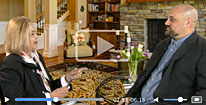
A unique webshow is devoted to the Art, Science and Timing of Real Estate.
View our latest show where Professional photographer Drew Rice gives tips and advice for preparing your home for a photoshoot.. | [ View Now ]
Sign up for our Email Newsletter
