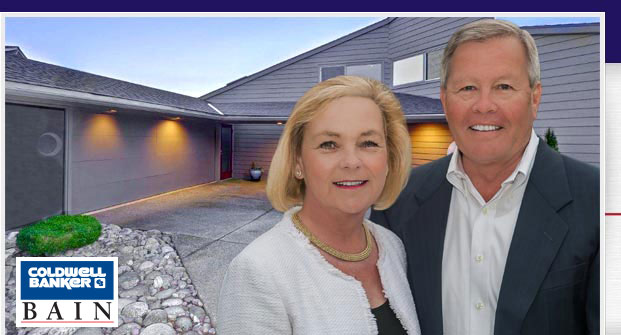



Welcome to Wangsness Connections, your connection to the finest homes and condominiums for sale in Seattle, and Seattle-Eastside communities of Bellevue, Medina, Issaquah, Clyde Hill, Capitol Hill, Madison Park, Laurelhurst, Magnolia, Queen Anne, Alki, Lake Washington, Lake Sammamish, Woodinville, and Kirkland.
View our featured properties , search for homes and condominiums for sale throughout the Seattle, Bellevue and Seattle Eastside area, check out our gallery of previously sold homes , listen to our weekly Northwest Real Estate Connections Radio Show , get access to extensive library of videos , audio and articles containing helpful buying, selling and home remodeling tips, and view upcoming Seattle area events .
The image of morning coffee on a Lake Washington dock draws buyers from around the world to King County's shoreline. Patricia and David Wangsness regularly speak with relocating executives who arrive expecting the postcard version of life on the water. Few arrive prepared for the financial reality behind those views.
Australians form a meaningful slice of those clients. Senior managers at Boeing, Amazon, and Microsoft often arrive from Sydney, Melbourne, or Perth having sold harbour- or riverfront homes back home. The cost structure, climate risks, and maintenance profile differ from anything in Australia in ways that show up on balance sheets within five years.
A waterfront listing price in places like Mercer Island, Laurelhurst, or the western shore of Lake Sammamish already carries a 40 to 120 percent premium over comparable inland homes. That premium is only the entry fee. Insurance, taxation, and structural upkeep quietly add a second mortgage-sized layer over the life of the property.
The aim here is to walk through every line item that turns a dream purchase into a long-term financial commitment, with enough Australian context to help buyers from down under translate their assumptions into King County reality.
Waterfront properties in King County cluster around a handful of prized geographies: the western and northern shores of Lake Washington, the eastern reaches of Puget Sound, Mercer Island, and the southern tip of Lake Sammamish. Each commands its own premium, but the pattern is consistent. A 1970s split-level sitting on a no-bank Lake Washington lot will sell for considerably more than the identical floor plan two blocks inland.
This premium reflects scarcity, not just view. Buildable waterfront is finite, and recent zoning changes have tightened rules around new dock construction, bulkhead replacement, and shoreline armouring. Buyers from Sydney's Mosman or Melbourne's Brighton will recognise this pattern. Limited coastline plus environmental controls equals sustained price gaps, and the gap tends to be larger relative to median income than in most Australian capitals.
Australian buyers accustomed to a registered valuer producing a single market value are often surprised that King County appraisals can come in below contract price in competitive situations, forcing buyers to cover the gap in cash. Coming prepared with that liquidity is the first step to avoiding a stalled escrow.
King County levies a property tax that looks modest compared with NSW or Victorian rates. Effective rates on waterfront parcels typically sit between 0.8 and 1.1 percent of assessed value, while Sydney council rates plus the state emergency services levy can exceed 1.5 percent on premium holdings. On paper, Washington looks cheaper.
The catch is what sits beneath the rate. Waterfront owners fund a share of the Lake Washington watershed initiatives, the King County Flood Control District, and depending on the municipality, separate utility levies for stormwater and shoreline stabilisation. Mercer Island and Bellevue add their own parks and infrastructure charges. None appear as a single line item, arriving instead as multiple small bills that add several thousand dollars a year to holding costs.
Australian buyers familiar with Brisbane City Council's separate flood mitigation and waterways charges will recognise the model. King County simply runs the same logic through more agencies. When modelling a purchase, request the last three years of every bill a seller has received, not just the property tax statement.
For most Australian buyers, the insurance discussion is where the cost of waterfront ownership becomes real. Standard homeowners policies in King County exclude flood and earthquake coverage, both essential for shoreline properties. Lenders in flood-designated zones legally require flood insurance, and on Lake Washington or Puget Sound frontage, those premiums routinely run between 3,000 and 9,000 dollars a year for a mid-sized home.
Earthquake coverage is optional, but anyone who watched the 2001 Nisqually event understands why most owners carry it. Earthquake premiums on a waterfront timber-frame home add another 1,500 to 4,000 dollars annually. Windstorm and sewer-backup riders are also common. Together, the insurance stack on a King County waterfront home often runs three to four times the cost of insuring the same home inland.
The closest Australian comparison is insuring a home on the Gold Coast's canal network, where flood and storm-surge riders routinely push premiums into five figures. Sydney harbour owners face a similar dynamic with marine-spray corrosion riders. The lesson is the same in both countries: water on the boundary line is a permanent insurance surcharge, not a one-off.
A seawall in King County has a working life of roughly 30 to 50 years depending on construction. Replacement on a typical Lake Washington property costs between 80,000 and 250,000 dollars. Docks, boat lifts, and pilings have shorter cycles. A treated-pile dock needs re-piling every 20 to 25 years, and modern composite decking has not yet proven itself in this climate over a full lifecycle.
Beyond the heavy marine work, the salt-and-moisture reality of the Pacific Northwest takes its toll. Exterior finishes degrade faster, HVAC systems corrode, and window seals fail earlier than the same components on an inland home. Owners who came from Perth, where the Swan River runs brackish, often underestimate how aggressively a freshwater lake combined with eight months of rain attacks building envelopes.
Homeowners associations are rare on most King County waterfront, meaning every cost falls directly on the owner. In Australia, the strata committee on a Sydney harbour apartment absorbs many of these expenses. Here, the individual writes the cheque.
Living on the water in King County means living with the water. Fog rolls in most mornings from October through April. Deck space is often smaller than expected because setback rules limit how close structures can sit to the shoreline. Wildlife is abundant, which is wonderful until a beaver chews through a dock float or a cormorant colony takes up residence on the boat lift.
Resale is healthy but slower. Waterfront homes in the Seattle metro typically take 40 to 70 days longer to sell than comparable inland properties, and the buyer pool is narrower. Owners who plan to stay seven to ten years usually do well financially, while those with a five-year horizon often see the premium erode after transaction costs. Buyers considering eventual resale should study the local luxury market dynamics carefully, starting with this look at selling a luxury home.
For Australian readers, the most useful translation is direct. Sydney's lower north shore waterfront trades at a similar premium to Mercer Island, but the climate, council structure, and insurance regime diverge. Melbourne's Port Phillip Bay edge is the closest analogue in feel, though Melbourne's price-to-premium ratio sits below King County's. Brisbane riverfront in suburbs like Hawthorne or Fig Tree Pocket is cheaper per square metre but carries higher flood risk and stricter building regulations after the 2022 events.
Australian foreign investment rules do not apply to US property purchases, which is a small advantage. Transaction costs are generally lower than NSW stamp duty on an equivalent property. Buyers moving capital from Perth or the Gold Coast often find they can stretch further in King County than at home, even after accounting for the hidden holding costs described above. For readers also weighing options outside the Pacific Northwest, the team behind trinity-florida-real-estate.com offers comparable buyer advisory services in central Florida.
If you are weighing a King County waterfront purchase against a comparable holding in Australia, a careful side-by-side model over ten years will almost always favour whichever market you intend to occupy full-time. For buyers ready to explore specific properties, the Wangsness team can run that model with real listings and local expense data.
Ready to see the numbers behind a specific waterfront home? Patricia and David Wangsness can pull comparable sales, recent tax bills, and insurance quotes for any property on Lake Washington, Lake Sammamish, Mercer Island, or Puget Sound. Reach out through the contact page to begin a serious conversation about what the view will actually cost you.

Listen live to Patricia and David's radio show Northwest Real Estate Connections every Wednesday from 3-4 PM Pacific Time on AM 1300 KKOL [ Listen Live ], and 1:00 pm to 2:00 pm every Sunday on Freedom AM1590.

A unique webshow is devoted to the Art, Science and Timing of Real Estate.
View our latest show where Professional photographer Drew Rice gives tips and advice for preparing your home for a photoshoot.. | [ View Now ]
Sign up for our Email Newsletter
