



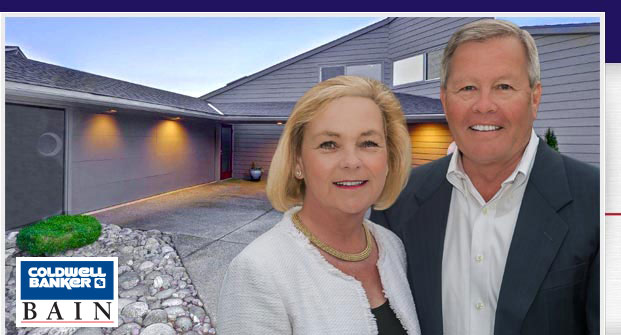



Welcome to Wangsness Connections, your connection to the finest homes and condominiums for sale in Seattle, and Seattle-Eastside communities of Bellevue, Medina, Issaquah, Clyde Hill, Capitol Hill, Madison Park, Laurelhurst, Magnolia, Queen Anne, Alki, Lake Washington, Lake Sammamish, Woodinville, and Kirkland.
View our featured properties , search for homes and condominiums for sale throughout the Seattle, Bellevue and Seattle Eastside area, check out our gallery of previously sold homes , listen to our weekly Northwest Real Estate Connections Radio Show , get access to extensive library of videos , audio and articles containing helpful buying, selling and home remodeling tips, and view upcoming Seattle area events .
Anyone who has stood on the eastern shore of Lake Washington at golden hour, watching the light bounce off the water toward Bellevue, knows why these properties draw a premium. What many buyers do not realise, however, is that the patch of land closest to the waterline is rarely the easiest to use. Local jurisdictions have layered shoreline rules onto private parcels, and getting your head around them before signing can save you from a rude surprise when you decide to add a deck or keep a stand of mature gums.
For Australians weighing up a move to the Pacific Northwest, the idea of owning a slice of lakefront feels familiar in spirit but quite different in the detail. Back home, buyers chase blocks along Pittwater, the Gold Coast broadwater, or the Tamar up in Tassie, and they assume that everything from the front gate to the high-tide mark is theirs to shape. On Lake Washington, the regulation sits closer to the house than most newcomers expect, and the rules protect water quality and salmon-bearing creeks rather than the wishes of any single owner.
The good news is that the system is not as opaque as it first appears. Once a buyer learns the vocabulary, maps out the specific parcel, and chats with agents who work these streets daily, the buffer zones start to make practical sense and become a planning tool rather than a source of frustration.
A waterfront buffer zone is the strip of land closest to the water, measured from the ordinary high-water mark inland, where regulations restrict how soil can be disturbed, what can be planted or removed, and how any structure is built. On Lake Washington, the figure is driven by a mix of state-level guidance and city-specific overlays that can stretch anywhere from fifty to well over two hundred feet depending on the municipality, the parcel's slope, vegetation, or proximity to a feeder stream.
The logic behind the rule mirrors what councils in places like Noosa or the Mornington Peninsula have been pushing for years. Impervious surfaces, lawn chemicals, and sewerage systems all leach into the lake over time, and the riparian buffer is meant to slow that contamination. Where a Sydney buyer might be familiar with a setback measured in single metres, a Lake Washington buffer often functions more like a working landscape than a setback line.
It is worth noting that the buffer is rarely an empty rectangle. Some of it is native plantings the previous owner is required to maintain, some is unbuildable lot, and some overlaps with utility easements. Getting this right early in the conversation helps buyers understand why a parcel with a long dock and a hundred-foot frontage might still have a smaller building envelope than a similar inland lot.
Permits on the lakefront fall under the joint watch of the City of Seattle, the City of Bellevue, King County, the Department of Ecology, and in some stretches the Army Corps of Engineers. A buyer who wants to extend a patio, replace a bulkhead, or add a new mooring will usually need at least two of those agencies to sign off, and each one has its own documentation, fee schedule, and timeline.
Australians who have been through a similar process at home will recognise the rhythm. In Melbourne, owners along the Yarra have to negotiate Melbourne Water before rebuilding a river-edge deck, and on Sydney Harbour any major works near the foreshore trigger the attention of the Harbour Trust. The pattern is the same: water trumps the wishes of any individual owner, and the burden sits with the applicant.
On Lake Washington, the shoreline substantial development permit is one of the trickier pieces, with an exemption threshold but a long tail of projects still falling under it. Buyers who plan significant earthworks, removal of mature trees, or a new pathway often need to bring in a coastal or geotechnical engineer, and that adds both time and cost to a closing plan.
Once a buyer accepts that the buffer zone is a constraint to design around rather than a setback to fight, the options start to open up. Many of the most enjoyable renovations are pushed back from the waterline, using the buffer as a planted courtyard rather than treating it as lost ground. Patios, detached studios, sport courts, and even lap pools regularly appear on parcels where the buffer itself stays comparatively wild.
There are practical limits worth flagging. Cutting a path through the buffer for water access is usually fine, but it has to follow certain widths and surface treatments. Removing a single mature tree can trigger replacement requirements, and bulkheads or seawalls, while tempting, often face replacement pressure from regulators who prefer soft armoured shorelines like vegetated slopes or engineered cobble.
If a buyer is weighing up which property to chase, it is worth asking for the shoreline environmental designation, the most recent critical-areas report, and any prior permit decisions tied to the address. An experienced agent can usually pull these from the city file before the second open home, and that kind of background work turns a tense bidding arvo into a calmer decision.
Buffers do not reduce value the way some buyers fear, but they do change the shape of value. Homes that have invested in thoughtful buffer plantings, well-designed pathways, and unfussy shoreline armour tend to enjoy a stronger sale-to-list ratio because buyers can picture themselves there without taking on a multi-year permitting project.
Buyers should also be wary of homes where the previous owner has overstepped. Encroachments into the buffer are sometimes inherited by new owners, and resolving them at sale can involve retrofits, removal of unauthorised structures, or replanting obligations. A quick check of aerial photos from different years often reveals whether the shoreline footprint changed during a recent renovation, and that single check can save buyers from picking up someone else's problem.
Sellers on the lakefront find that thoughtful staging pays off in spades, and the same playbook that works for fireplaces carries over to shoreline amenities. The trick is to highlight what the rules allow rather than what they forbid, and there is a useful rundown on how-to-incorporate-fireplaces-as-a-selling-point-in-your-listing that explains the framing approach. The same mindset applies when talking up a native plant buffer or a tidy replacement dock: make the constraint feel like a feature.
The right agent on the lake is part detective, part interpreter, and part translator between the planning code and the buyer's daydreams. Local specialists walk the buffer with tape measures and printed maps, they know which neighbourhoods carry the more flexible critical-areas overlays, and they have watched enough shoreline permits to know what is realistic on a six-month timeline.
Wangsness Connections, based on the Eastside and serving buyers across Seattle and Bellevue, brings exactly this kind of orientation to the table. Pat and David Wangsness spend more of their week around the water than inland, and they have built a network of surveyors, permit expediters, and shoreline designers who can help a buyer move from inspection to settlement without losing momentum on the regulatory side.
For apartment dwellers who would rather ease into the market before taking on a full waterfront parcel, it is worth checking the practical side of things first - staying connected at Pebble Brook covers the kind of basic amenity details that make a weekday move painless and keep remote work humming along.
Reach out to the Wangsness team to start the conversation early, before you fall in love with a particular jetty or a particular stretch of gravel beach. The buffer is much easier to plan for than to negotiate after the fact, and a half-day of background work up front is the cheapest upgrade any lakefront buyer can make.

Listen live to Patricia and David's radio show Northwest Real Estate Connections every Wednesday from 3-4 PM Pacific Time on AM 1300 KKOL [ Listen Live ], and 1:00 pm to 2:00 pm every Sunday on Freedom AM1590.

A unique webshow is devoted to the Art, Science and Timing of Real Estate.
View our latest show where Professional photographer Drew Rice gives tips and advice for preparing your home for a photoshoot.. | [ View Now ]
Sign up for our Email Newsletter
