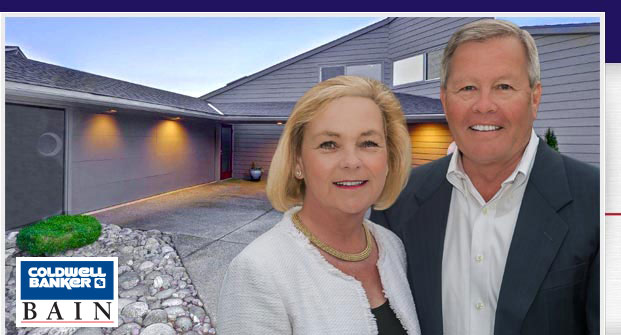



Welcome to Wangsness Connections, your connection to the finest homes and condominiums for sale in Seattle, and Seattle-Eastside communities of Bellevue, Medina, Issaquah, Clyde Hill, Capitol Hill, Madison Park, Laurelhurst, Magnolia, Queen Anne, Alki, Lake Washington, Lake Sammamish, Woodinville, and Kirkland.
View our featured properties , search for homes and condominiums for sale throughout the Seattle, Bellevue and Seattle Eastside area, check out our gallery of previously sold homes , listen to our weekly Northwest Real Estate Connections Radio Show , get access to extensive library of videos , audio and articles containing helpful buying, selling and home remodeling tips, and view upcoming Seattle area events .
Interest rate changes influence every level of real estate, but their effect on Seattle’s luxury market can look different from the broader housing cycle. High-net-worth buyers may have substantial cash reserves, investment income, or significant equity from a previous home. Even so, borrowing costs affect purchasing power, portfolio decisions, pricing expectations, and the pace of negotiations.
Seattle, Bellevue, and nearby Eastside communities each respond to shifting financial conditions in their own way. A waterfront residence in Madison Park, a condominium in downtown Bellevue, and a newer custom home in Medina may attract different buyer profiles, yet all are influenced by mortgage rates, economic confidence, and the availability of desirable inventory.
Understanding these forces helps sellers position a property thoughtfully and gives buyers a clearer framework for evaluating financing options. The right strategy depends on the home, the neighborhood, the client’s timeline, and the broader market signals appearing alongside rate changes.
Luxury buyers often have more flexibility than conventional buyers, but few ignore the cost of capital. A rise in mortgage rates can make a large loan materially more expensive over time, even when the buyer could technically qualify. Some purchasers respond by reducing their loan size, increasing their down payment, or choosing a property below their initial price range.
Rates also affect opportunity cost. A buyer who can earn competitive returns in bonds, money-market funds, or other investments may compare those returns with the cost of borrowing. When financing becomes more expensive, using cash for a purchase may appear less attractive, especially for buyers who prioritize liquidity and portfolio diversification.
This does not remove demand from the luxury segment. It can shift demand toward properties with distinctive value, strong construction quality, exceptional locations, or features that are difficult to replicate. Buyers may take longer to decide, but they can remain highly motivated when a home meets specific lifestyle and investment criteria.
Higher rates frequently encourage existing homeowners to remain in place, particularly when they hold an older mortgage with a substantially lower interest rate. That “lock-in” effect can limit new listings and create a thinner supply of luxury homes. In neighborhoods where inventory is already selective, a small change in listing volume can influence buyer competition.
At the same time, some sellers need to move because of relocation, estate planning, changing household needs, or a desire to redeploy capital. These owners may be less focused on the rate environment than on timing and execution. A well-prepared property can stand apart when buyers have fewer choices and are carefully comparing condition, location, and long-term value.
Bellevue and the broader Eastside can see additional sensitivity because of technology-sector employment, executive relocations, and business formation. A strong local economy can support demand, while uncertainty in company valuations or compensation packages may lead some buyers to delay. Luxury real estate activity therefore reflects both financing conditions and the confidence of the region’s high-income workforce.
Interest rates do not automatically determine home prices. They influence what buyers can comfortably pay, but scarcity, property quality, neighborhood desirability, and local employment trends remain important. A unique home with views, privacy, architectural distinction, or proximity to major amenities may retain strong appeal even when the market becomes more selective.
Pricing strategy becomes especially important when the cost of financing rises. An ambitious list price can lead to longer market exposure, fewer showings, and later price adjustments. Sellers benefit from studying relevant luxury comparables rather than relying on broad countywide averages, since high-end transactions can vary widely by location and property characteristics.
The table below illustrates how different rate environments may affect common decisions. These are directional patterns rather than forecasts, and individual outcomes depend on financing structure, income, assets, and the home itself.
| Market Condition | Buyer Behavior | Seller Considerations | Likely Luxury Market Effect |
|---|---|---|---|
| Rates decline steadily | More buyers revisit financing and expand searches | Strong preparation can capture renewed demand | More activity and firmer competition |
| Rates remain elevated | Buyers emphasize value, quality, and monthly cost | Accurate pricing and presentation become critical | Selective demand and longer decision cycles |
| Rates move unpredictably | Buyers seek flexibility and wait for clarity | Clear positioning helps reduce uncertainty | Uneven activity by neighborhood and price tier |
| Rates rise quickly | Some financed buyers reduce budgets or pause | Sellers may need realistic expectations | Fewer offers and greater negotiation |
| Rates stabilize after volatility | Buyers regain confidence in planning | Timing and launch strategy become more predictable | Gradual improvement in transaction volume |
A luxury purchase does not always follow the standard 30-year fixed-mortgage model. Buyers may consider jumbo loans, adjustable-rate mortgages, securities-backed lending, bridge financing, or a larger cash contribution. Each approach carries different risks, costs, qualification standards, and liquidity implications.
An adjustable-rate loan can offer an initial payment advantage, but it introduces future uncertainty. A bridge loan may help a buyer acquire a new home before selling an existing one, while also creating additional obligations. Cash can simplify a transaction and strengthen an offer, yet it may reduce flexibility for investments, renovations, taxes, or business needs.
Buyers should evaluate financing with a qualified lender and tax or financial professional before making an offer. A well-structured preapproval should reflect the specific property type and loan size, especially when purchasing a condominium with building-level financial reviews or a high-value home requiring more complex underwriting.
Presentation matters more when buyers have fewer reasons to stretch. Addressing deferred maintenance, improving lighting, refining landscaping, and completing targeted renovations can help a property communicate value quickly. Luxury marketing should also show the lifestyle surrounding the home, including views, entertaining spaces, privacy, schools, transit access, cultural amenities, and neighborhood character.
The goal is not to over-improve. A renovation should be evaluated through the lens of likely buyer expectations, local comparable sales, and the time available before listing. High-quality photography, video, floor plans, and carefully written property details can help qualified buyers understand the home before committing to a private showing.
A trusted real estate advisor can also help establish a launch strategy based on current inventory and buyer activity. For insight into how clients have experienced the process, prospective sellers can review client testimonials alongside an agent’s market knowledge and service approach.
Seattle’s luxury market benefits from several sources of demand beyond local move-up buyers. Corporate relocations, executive transfers, international connections, and migration from other major metropolitan areas can bring purchasers who value convenience and specialized guidance. These buyers may need help understanding commute patterns, neighborhoods, schools, condominium buildings, and the practical details of settling in the region.
Relocation clients can also be less rate-sensitive when a move is tied to a job, family need, or fixed start date. They still care about affordability and financing, but timing may carry greater weight than waiting for a minor rate improvement. A home that supports a demanding work schedule, offers access to airports and urban centers, or provides a particular lifestyle can justify action.
For sellers, this reinforces the importance of broad exposure and polished digital presentation. For buyers, local expertise can shorten the learning curve and reveal distinctions between communities that may appear similar from a distance. Seattle, Bellevue, Kirkland, Mercer Island, and Medina each offer different patterns of housing, access, privacy, and amenities.
There is no universal response to a rate change. A buyer with substantial liquidity and a long ownership horizon may view a higher rate differently from a buyer relying on a large jumbo loan. A seller moving for a new opportunity may prioritize certainty, while another may prefer to wait for better pricing conditions.
The most useful approach is to separate the financial decision from the emotional noise surrounding daily rate headlines. Review several payment scenarios, define a comfortable budget, and identify which property features truly matter. Sellers should compare net proceeds under realistic pricing options and account for preparation, carrying costs, and the likely negotiation range.
Useful steps include:
The impact of interest rate changes on Seattle’s luxury market is best understood as a shift in choices rather than a simple rise-or-fall formula. Financing costs can affect urgency, but location, scarcity, quality, and personal priorities continue to shape the strongest decisions.
Whether preparing to sell a fine home, searching for a condominium, or relocating to the Eastside, clients can use local knowledge to turn changing conditions into a disciplined plan. Connect with Seattle luxury expertise for guidance on neighborhood value, marketing strategy, property searches, and the next step in your real estate move.

Listen live to Patricia and David's radio show Northwest Real Estate Connections every Wednesday from 3-4 PM Pacific Time on AM 1300 KKOL [ Listen Live ], and 1:00 pm to 2:00 pm every Sunday on Freedom AM1590.

A unique webshow is devoted to the Art, Science and Timing of Real Estate.
View our latest show where Professional photographer Drew Rice gives tips and advice for preparing your home for a photoshoot.. | [ View Now ]
Sign up for our Email Newsletter
