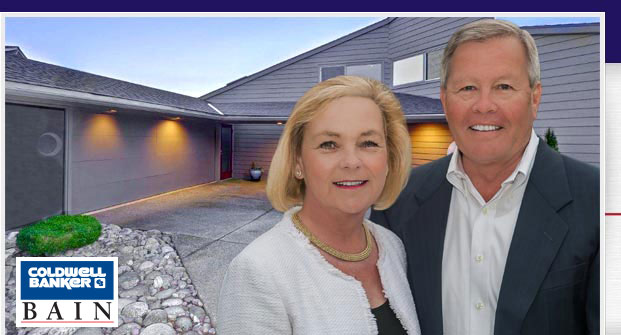



Welcome to Wangsness Connections, your connection to the finest homes and condominiums for sale in Seattle, and Seattle-Eastside communities of Bellevue, Medina, Issaquah, Clyde Hill, Capitol Hill, Madison Park, Laurelhurst, Magnolia, Queen Anne, Alki, Lake Washington, Lake Sammamish, Woodinville, and Kirkland.
View our featured properties , search for homes and condominiums for sale throughout the Seattle, Bellevue and Seattle Eastside area, check out our gallery of previously sold homes , listen to our weekly Northwest Real Estate Connections Radio Show , get access to extensive library of videos , audio and articles containing helpful buying, selling and home remodeling tips, and view upcoming Seattle area events .
Buying a home on the other side of the Pacific used to mean a quick holiday visit and a handshake at settlement. Today, Australians are quietly building a second life in the Pacific Northwest, often attracted by tech jobs in Bellevue and the lure of leafy, walkable neighbourhoods. The thing that trips most people up, however, is something that locals have known for decades: where the school catchment line falls can swing a property's value by tens of thousands of dollars in a single postcode.
For anyone pricing up a move from Sydney or Melbourne, this is the equivalent of discovering that in your new city, the boundary between two primary school zones doubles as a property value border. School districts on Seattle's Eastside are not just administrative lines on a map; they are economic fault lines that shape which streets are sought-after and which quietly stagnate.
Australians know the feeling of a Saturday auction in Mosman or Hawthorn where two near-identical homes sell for wildly different prices because one sits inside the catchment for a top school. The same dynamic plays out in Bellevue and Kirkland, only the auction floor is replaced by a multiple-offer situation the moment a well-kept home hits the market. Buyers routinely waive inspection contingencies and write escalator clauses, all because the address falls inside a particular high school boundary.
The psychology is familiar to anyone who has watched Sydney's eastern suburbs heat up around selective high schools. What is different on the Eastside is the scale of the premium. A Bellevue address inside the top-rated catchment can command a 20 to 30 percent uplift over a comparable home a few blocks away, according to recent market commentary. Patricia and David Wangsness have watched this pattern repeat across cycles, often within weeks of a boundary redraw or a new school opening.
When locals say "the Eastside," they usually mean the triangle formed by Bellevue, Kirkland and Redmond, all within easy reach of Lake Washington. Each of these cities carries its own prestige catchments, and buyers quickly learn which streets matter. Bellevue's Somerset, West Bellevue and Clyde Hill neighbourhoods, for instance, feed into schools that consistently rank at the top of Washington state lists, while parts of Factoria and Crossroads settle for solid but less glamorous ratings.
For an Australian weighing up a place near Cottesloe or Balmain, the comparison is almost too direct. Both markets reward families willing to pay a quiet premium for a quieter street and a better-run public school. The difference is that on the Eastside, the premium is locked in by lines that can shift overnight when the district redraws attendance maps, something that can both create and destroy equity in a single calendar year.
District boundary adjustments are not a one-off curiosity; they happen every few years as populations shift and new schools are built. In Australia, families lobby councils and the education department in similar ways, particularly around new suburbs in Brisbane's outer growth corridors. On the Eastside, the politics are just as pointed, with parent groups turning up to school board meetings to argue for their streets to be moved into a stronger catchment.
The practical lesson for a buyer coming from Brisbane or Perth is simple: do not fall in love with a home until you have checked exactly which attendance area it sits in, and how stable that boundary has been over the past decade. A street that has been quietly swapped from one high school to another over the years tells you something about the politics of the area, and about the risk of further moves in future.
Boundary changes rarely affect only the houses that gain a new school. The spillover is significant. Streets just outside the prized catchment often see softer growth, because buyers with children at the right age will pay extra to be on the right side of the line, leaving the rest of the market to first-home buyers and downsizers. Real estate agents on the Eastside know this pattern intimately and price listings accordingly, even on homes that have nothing to do with schools in their physical layout.
It is the same ripple you see in Sydney when the Georges River boundary debates push buyers from Kogarah toward Hurstville, or in Melbourne when a zone change in Glen Waverley sends a wave of inquiries to Mount Waverley. The lesson is that a school district is a living thing, not a static label, and ignoring its movements is a fast way to overpay for a property whose real value will plateau the moment a boundary shifts the other way.
A common mistake from international buyers is to treat school ratings as a kind of marketing badge rather than a measurable input into price. The honest numbers tell a clearer story. Median home prices inside Bellevue's strongest catchments have climbed steadily, with the trend highlighted in recent analysis on median home prices in Bellevue and why they keep rising. Pull that data into a spreadsheet next to the school ranking reports from GreatSchools or the state education office, and the correlation is hard to ignore.
For Australians accustomed to checking Domain or realestate.com.au for school catchment overlays, the equivalent tools on the Eastside take a little getting used to. Boundary maps live on individual district websites, and a quick call to the school district's enrolment office can confirm the attendance area down to the parcel number. Doing that homework before making an offer is a far cheaper move than learning the hard way at settlement.
| District | Average median home price (USD) | Typical school rating | Boundary stability over past decade | Buyer profile |
|---|---|---|---|---|
| Bellevue (Somerset/West) | $2.4M – $3.1M | 9–10/10 | Very stable | Relocating tech executives, professional families |
| Bellevue (Crossroads/Factoria) | $1.1M – $1.5M | 6–8/10 | Moderate, periodic redraws | First-home buyers, local upgraders |
| Kirkland (Juanita area) | $1.3M – $1.8M | 7–9/10 | Stable | Young families, dual-income professionals |
| Redmond (Education Hill) | $1.4M – $1.9M | 8–10/10 | Stable, capacity-driven growth | Tech corridor employees, long-term holders |
| Issaquah | $1.2M – $1.7M | 8–9/10 | Recently expanded | Suburban family buyers, value-seekers from Bellevue |
Numbers reflect late-2025 listings and should be read as a guide only. Always check the most recent boundary maps before making an offer.
If you are weighing a Pacific move from the eastern suburbs of Sydney or the bayside strip of Melbourne, treat school districts the same way you would treat a flood map or a bushfire zone back home. They are an underlying condition of the land, and they can change the resale value of a property more dramatically than any renovation. Pull the data, walk the catchment, talk to neighbours, and confirm everything in writing before you go to contract.
The team at Wangsness Connections works with relocating buyers every week and can walk you through which streets hold their value when boundaries shift. Reach out before you start touring homes and the right school district will end up finding you, rather than the other way around.

Listen live to Patricia and David's radio show Northwest Real Estate Connections every Wednesday from 3-4 PM Pacific Time on AM 1300 KKOL [ Listen Live ], and 1:00 pm to 2:00 pm every Sunday on Freedom AM1590.

A unique webshow is devoted to the Art, Science and Timing of Real Estate.
View our latest show where Professional photographer Drew Rice gives tips and advice for preparing your home for a photoshoot.. | [ View Now ]
Sign up for our Email Newsletter
